
PiLAF, IITA and NADF Engage Key Stakeholders to Advance Nigeria’s Agri-Food Baseline Outlook
The Innovation Lab for Policy Leadership in Agriculture and Food Security (PiLAF), in collaboration with the International Institute of Tropical Agriculture (IITA) and the National Agricultural Development Fund (NADF), has undertaken a series of stakeholder engagement visits to advance the development of the Nigeria Agri-Food Baseline Outlook (NABO), 2026 – 2035.
Conducted from 13th to 15th October 2026, the visits aimed to introduce the NABO initiative to key public institutions, research organisations and agricultural commodity associations; strengthen stakeholder ownership; identify relevant data sources and gaps; and explore opportunities for technical cooperation and institutional collaboration.
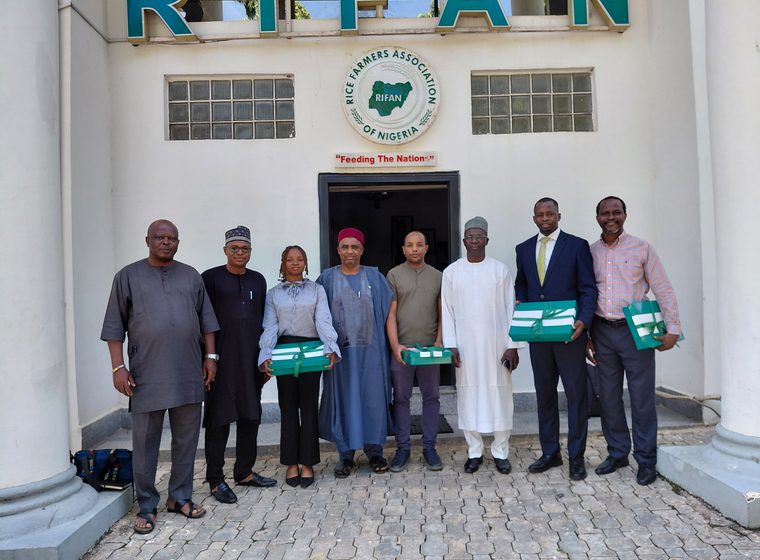
The engagements involved the National Bureau of Statistics (NBS), the Federation of Agricultural Commodity Associations of Nigeria (FACAN), the International Food Policy Research Institute (IFPRI), the National Agricultural Extension and Research Liaison Services (NAERLS), the Soybean Integrated Association, the Rice Farmers Association of Nigeria (RIFAN), and the Oil Palm Growers Association of Nigeria (OPGAN). The team also engaged with the Departments of Planning and Policy Coordination (P&PC) and Farm Inputs Support Services (FISS) of the Federal Ministry of Agriculture and Food Security.
Strengthening Data Access and Institutional Collaboration
Discussions with NBS and NAERLS emphasised the importance of reliable data, institutional cooperation and technical capacity in developing a credible and policy-relevant baseline outlook. NBS highlighted potential sources of relevant statistical information, including food price data and national survey datasets, while acknowledging existing data availability gaps.
NAERLS expressed interest in collaborating with the NABO initiative, identifying opportunities for technical cooperation, joint data collection, and participation in the NABO Technical Working Group. These engagements reinforced the importance of drawing on the expertise, resources, and existing data systems of relevant national institutions.

Bringing Agricultural Value Chains into Focus
Engagements with FACAN and the commodity associations highlighted the need for comprehensive, value-chain-level information to better understand Nigeria’s agri-food systems. Discussions emphasised the importance of data spanning production costs, processing, marketing, distribution, and post-harvest losses, alongside insights into the production and market challenges confronting agricultural stakeholders.
The associations expressed willingness to contribute relevant information to the process. Further engagements will help clarify specific data requirements, establish practical mechanisms for information sharing, and ensure that the experiences and realities of agricultural value-chain actors inform the development of the Outlook.
Exploring Research Partnerships and Capacity Development
The engagement with IFPRI focused on opportunities for technical capacity development, potential resource support and further collaboration around the NABO initiative. Discussions also explored opportunities to present the Outlook and develop policy-oriented outputs that can support evidence-informed decision-making.
Similarly, engagements with the Federal Ministry of Agriculture and Food Security departments highlighted interest in collaboration, active participation in developing the Outlook, and potential capacity-building opportunities for relevant staff. These discussions point to the value of connecting research expertise with institutional knowledge and policy implementation priorities.

Building a Stronger Evidence Base for Nigeria’s Agri-Food Future
The stakeholder visits represent an important step towards building the partnerships and evidence base required for the Nigeria Agri-Food Baseline Outlook. Beyond introducing the initiative, the engagements created opportunities to identify data sources, understand information gaps, strengthen institutional relationships, and encourage contributions from organisations working across Nigeria’s agri-food landscape.
The next phase will focus on following up on data requests, formalising collaboration arrangements, clarifying stakeholder contributions, and exploring targeted capacity-development opportunities.
Through its collaboration with IITA and NADF, PiLAF remains committed to advancing rigorous agricultural policy research and generating evidence that connects data, institutions, and policy priorities. The NABO initiative seeks to strengthen the information available to government, the private sector, researchers, and other stakeholders for more informed planning and decision-making across Nigeria’s agri-food systems.
By connecting data with policy and stakeholder expertise, the Nigeria Agri-Food Baseline Outlook aims to contribute to a stronger evidence base for Nigeria’s agricultural transformation and food security.