

Bridging the Last Mile: Key Insights from PiLAF’s 18th Brown Bag Series
The Innovation Lab for Policy Leadership in Agriculture and Food Security (PiLAF) recently hosted the 18th edition of its Brown Bag Series, a bi-monthly knowledge-sharing platform that brings together researchers, practitioners, and policy actors to discuss critical issues shaping agricultural transformation.
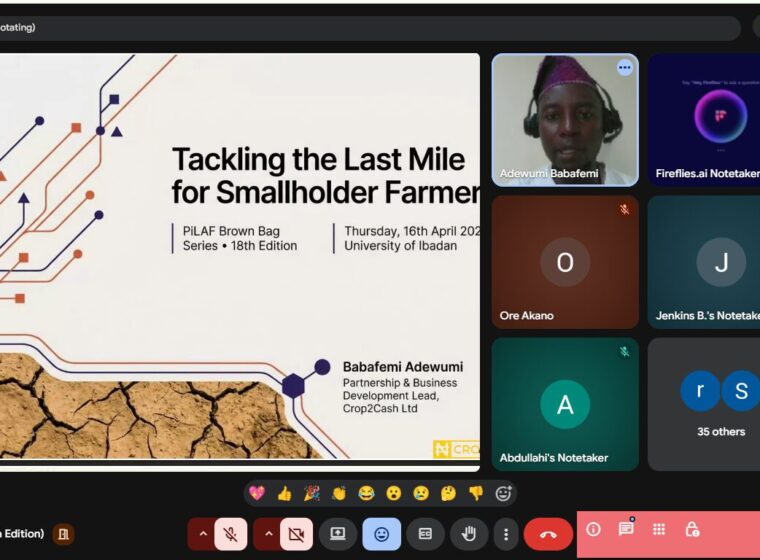
The session, themed “Tackling the Last Mile Infrastructure Gap for Smallholder Farmers through Digital Solutions,” featured Mr. Babafemi Adewumi, Business Development Executive at Crop2Cash, who shared practical insights on how digital innovations can address long-standing barriers affecting smallholder farmers.
Understanding the Last Mile Challenge
Smallholder farmers, who produce about 80% of Nigeria’s food, often operate in remote areas with limited access to infrastructure, finance, and extension services. Mr. Adewumi explained that the last mile gap affects three critical areas: input delivery, output logistics, and access to information. These challenges increase production costs and limit farmers’ ability to scale their businesses beyond subsistence.
Digital Solutions for Financial Inclusion
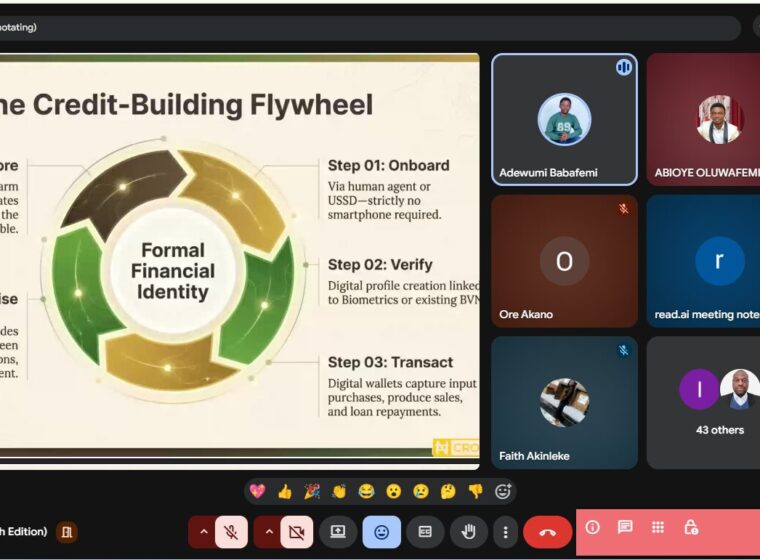
A major highlight of the session was Crop2Cash’s approach to designing solutions with farmers rather than for them. Recognizing that many farmers rely on feature phones and operate in low-connectivity environments, the company leverages USSD technology and local agent networks to provide digital financial services.
Through this system, farmers can purchase inputs, save, and transact without internet access. Over time, these transactions build a financial identity and credit profile, enabling financial institutions to assess farmers’ creditworthiness and extend financing.
Managing Risk and Building Trust
To mitigate lending risks, Crop2Cash works with registered farmer clusters or cooperatives where members cross-guarantee one another. Loans are often issued in the form of agricultural inputs rather than cash, reducing the risk of diversion and ensuring funds support productivity. The approach also addresses the broader trust deficit that exists between farmers and financial institutions, while improving transparency and accountability in agricultural financing.
Collaboration for Scalable Impact
The session emphasized that closing the last mile gap requires systemic collaboration among government agencies, research institutions, private sector actors, and development partners. Mr. Adewumi highlighted that effective digital solutions must be inclusive, context-sensitive, and built around the realities of rural farmers.
The discussion concluded with a reflection on the importance of innovative, farmer-centered digital infrastructure in unlocking productivity, strengthening food systems, and improving rural livelihoods.
Through platforms like the PiLAF Brown Bag Series, stakeholders continue to exchange ideas and identify practical pathways for building a more inclusive and resilient agricultural sector.
Watch the full recording on PiLAF YouTube Channel: https://youtu.be/fWq-8G04DKI